

Multiple Myeloma: What Causes It and Risk Factors
Multiple Myeloma: What Causes It and Risk Factors
A few weeks ago, I was a panelist discussing how Multiple Myeloma patients can thrive during treatment and beyond (March is Multiple Myeloma Awareness Month). After the panel I met with several audience members who purchased my book and one woman said “My uncle was recently diagnosed with this disease and we don’t know why this happened. What is Multiple Myeloma and what are some of the risk factors?”
What Is Multiple Myeloma?
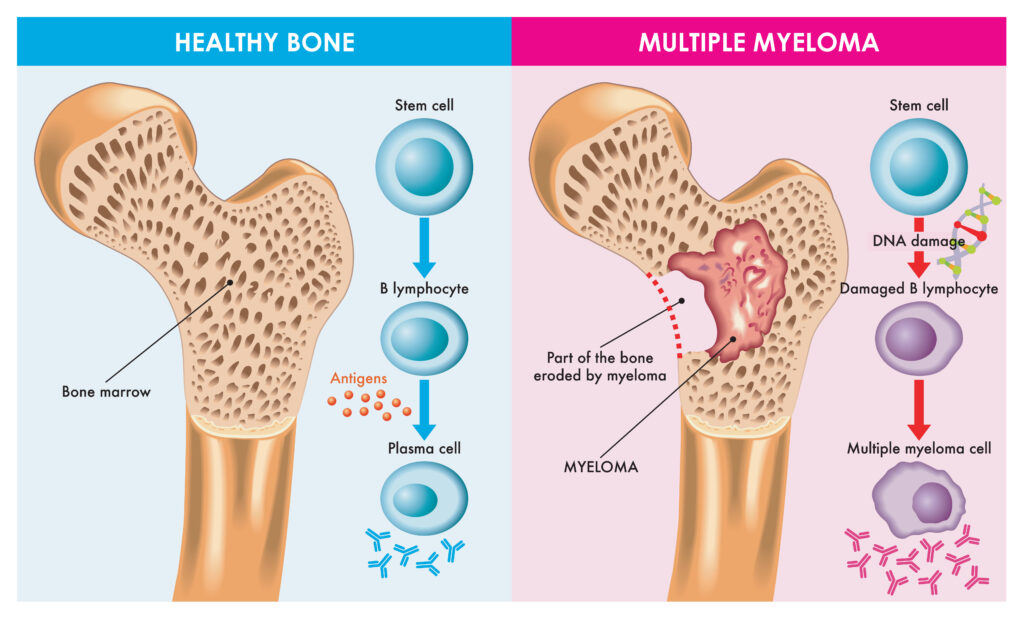
Multiple Myeloma is a malignancy (cancer) of the body’s plasma cells. Plasma cells are immune system cells that produce antibodies against viruses, bacteria, and fungi that invade the body and cause infection.
Plasma cells, also called plasmacytes, are differentiated B-lymphocyte white blood cells. They are secreted immunoglobulin or antibodies. Plasma cells are responsible for humoral immunity, and without their presence, you may be more susceptible to recurrent infections. Speak with your healthcare provider more about this topic.
Plasma cell cancer is when abnormal plasma cells cause tumors in the bone or soft tissue. When there is one tumor it is a plasmacytoma. When plasma cells cause multiple tumors, it is called multiple myeloma.
While the etiology (i.e., cause) of the disease is not known, several risk factors are important to be aware of. Multiple myeloma risk factors that are non-modifiable (i.e., unable to be changed) include:
- 50 years or older
- Male sex
- Being Black or of African descent
Multiple Myeloma
Multiple myeloma occurs in 15.8 out of 100,000 African Americans compared to 6.9 White adults. The interplay of economic, social, biological, and epigenetic factors is one reason why the number is higher in African Americans.
Risk factors that are not modifiable, such as heritable and genetic (listed above) are also at play in this health disparity. Genetic studies show that Whites have the majority of the 23 gene loci linked to multiple myeloma risk. People of African ancestry have significantly fewer of these gene loci. Therefore, the higher incidence of multiple myeloma in African Americans may be due to modifiable risk factors.
Modifiable Risk Factors: Overweight and Obesity
Evidence is pointing to metabolic factors that increase the risk of multiple myeloma, such as overweight and obesity, as playing a crucial role in the development of this disease in African Americans, who remain at higher risk of these metabolic factors.
Obesity is estimated to be 13.6% more prevalent in African American adults when compared to other adults. The current rate of obesity is 48% in Black adults compared to 34.5% of White adults. Identifying and fixing the cultural needs of African Americans as it relates to overweight, obesity, physical activity, and dietary-related cancer prevention may be one way to address their increased risk.
Socioeconomic factors such as nutritious food “desserts” (or a plethora of fast food) and inadequate access to nutritious food in local grocery stores are some reasons the obesity rates are higher in Black adults. Furthermore, the shifting of African Americans out of major U.S. cities into suburbs has increased the sedentary lifestyle due to the reliance on cars and increased commute times to work.
Education is also an important part of the increased risk of multiple myeloma. The evidence shows that health disparities hinge on lower socioeconomic status, be it due to lack of education, health insurance accessibility, and income, or the type of occupation. A few of these factors, such as lack of education is estimated to increase the risk of multiple myeloma by 17%, and lower income increases the risk by 28%.
Watch My Latest Video: The Rise in Cancer in Those Under 50
Thoughts
Thanks for reading this article, “Multiple Myeloma and The Cancer Prevention Strategy That Often Gets Overlooked” in honor of Multiple Myeloma month. If you have any thoughts or comments, share them below. Schedule a complimentary 15-min call with me to get clear on what modern, science-based cancer prevention looks like.
FREE RESOURCES
Have more cancer prevention questions? We may have the answers in our free resources. Read or download them now:
1. Download the FREE eBook “HEALTHY FOOD SWAPS” if you’re ready to ditch processed and ultra-processed foods (which are linked to chronic inflammation) with healthier snack options. You’ll also get a list of healthy snacks according to weight and health goals (heart, brain focus, energy)
2. READ about the 10 foods that prevent cancer and our article on 6 Foods for Cancer Prevention
3. Read the article 4 Tips to Improve Breast Cancer Survival along with The Breast Cancer Diet that Increases Survival, then DOWNLOAD the FREE breast cancer survival kit that includes questions to ask your doctor, 8 tips to help lower your risk of a new or recurring breast cancer diagnosis, and 3 days of easy plant-based recipes.
4. Read the article Prevent a Colon Cancer Recurrence and The Optimal Colon Cancer Diet
ABOUT THE CANCER DETOX

Hi! I am Dee Grace Ph.D., scientist, author, and health coach based in Atlanta, Georgia. The Cancer Detox helps cancer patients, survivors, and those wanting to stay ahead of the curve prevent a new or recurring cancer with science-based health coaching.
Is the fear of cancer keeping you up at night? Is what you’re eating putting you at risk for cancer? What if you’re doing everything wrong and don’t even know it? Schedule a complimentary 15-min call with me to get clear on what modern, science-based cancer prevention looks like.
Purchase my book “Cancer Prevention: Diet and Lifestyle Factors that Reduce Your Risk” on Amazon. Pulling from over 100 science-based studies, I provide the case for why cancer isn’t always random and often preventable. You’ll get 24 Prevention Habits that hold you accountable for implementing a cancer prevention lifestyle. along with over 40 cancer prevention guidelines for fighting breast, lung, colon, and prostate cancers.
DISCLAIMER
The information in this article is for educational purposes and is not meant to treat, diagnose, or prescribe medications or herbs. For questions on the information contained in this article, please consult with your healthcare provider. This information is intended for educational purposes only, and you should consult with your healthcare provider and a licensed dietician or certified nutritionist for additional information related to the content of this article.