
6 Foods for Cancer Prevention
INTRODUCTION
In our most recent article, 10 Foods That Prevent Cancer we provided a list of foods that are easy to find and INEXPENSIVE! And the cancer prevention fun continues in this article with 6 more foods shown to prevent cancer!
Why focus on cancer prevention foods? Because of the following reasons:
- A cancer diagnosis is expensive even for those who are “well off” (i.e., making six figures) as I discuss in my most recent book
- A cancer diagnosis is stressful
- A cancer diagnosis is disruptive to your life
- A cancer diagnosis is scary
- The rates of new cancer cases are increasing with a 36% increase from 2000 to 2020 in the general population (https://usafacts.org/articles/how-have-cancer-rates-changed-over-time/).
There are disturbing new trends in young people (younger than 50 years old) being diagnosed with cancer typically seen in older adults. [1] Between 2000 – 2012 there were increased rates of breast cancer, prostate cancer, and colon cancer in people under the age of 50. This has NOT been seen in previous generations (e.g., baby boomers).
6 FOODS FOR CANCER PREVENTION
#1 SPICES
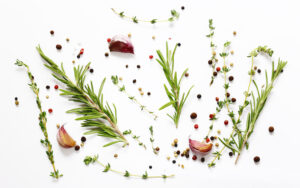
spices and cancer prevention
Bringing more spice to your plate using broccoli sprouts, horseradish, mustard, and wasabi can help prevent cancer. A study found that adding these spicy foods, which contain a certain ingredient called myrosinase, can boost the cancer-fighting potential of broccoli and other cruciferous vegetables (e.g., cabbage, kale).
How? Myrosinase is an enzyme that helps to convert compounds in these vegetables to cancer-fighting chemicals. Specifically, sulphorophane is created from the action of the enzyme myrosinase. Sulphorophane is made from glucoraphanin, which the enzyme myrosinase acts upon.
One word of caution when cooking broccoli, do NOT overcook it! Myrosinase is inactivated when spicy foods like broccoli sprouts and horseradish are overcooked. [2]
#2 RED ONIONS
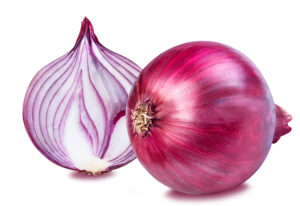
Red onion and cancer prevention
In our last “Top Foods for Cancer Prevention” list we discussed onions. This underappreciated superfood, that many people avoid because of their offensive odor, is one that you should include on your next salad or sandwich.
Onions contain a chemical called quercitin, a flavonoid with cancer-fighting properties. These flavonoids are known as phytochemicals, what I like to call water hoses that put out “fires” in the body. They are bioactive compounds. They are actively creating processes that work to stop cancer growth and progression.
Plant-based foods are the sources of these phytochemicals and include now only flavonoids but organosulfides and carotenoids. Red onions, in particular, also contain anthocyanin, which helps boost the effects of quercitin, which scavenges the body’s cells and tissues for free radicals.
These antioxidants work in cancer prevention by creating an environment where cancer cells die (e.g., apoptosis or cell death) and prevents uncontrolled growth of cancer cells (i.e., tumorogenesis). [5]
#3 OMEGA-3 FATTY ACIDS
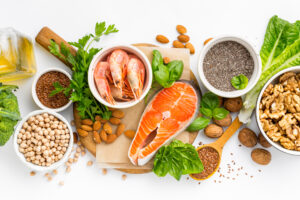
Omega 3 fatty acids and cancer prevention
Omega-3 fatty acids consist of a-linolenic acid (ALA), eicosapentanoic acid (EPA) and docosahexaenoic acid (DHA). Fish and other marine life (e.g., algae) contain both EPA and DHA, as well as some plant-based foods such as walnuts and flaxseeds. Some studies show health benefits in cancer survivors who consume high amounts of omega-3 fatty acids. A study in colon cancer survivors showed that those patients who consumed 0.30 grams per day of omega-3 fatty acids had a 41% lower risk of dying from the disease compared to those who only consumed less than 0.10 grams a day. [7]
#4 MUSHROOMS
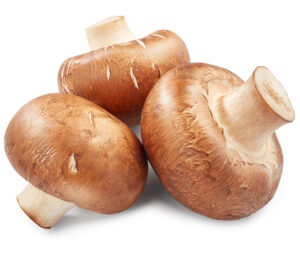
Mushrooms and cancer prevention
Either you love them or hate them, but regardless no one can deny the health benefits of mushrooms. The good new is that they are an important cancer fighting food. Researchers collected over 17 scientific and clinical studies and found that higher mushroom consumption is associated with lower risk of breast cancer and all cancers. [8]
How much should you eat? About 1/8 to ¼ cup a day. How do they work? By providing antioxidants, specifically ergothioneine, which reduces inflammation and oxidative stress in the body.
#5 PURPLE POTATOES
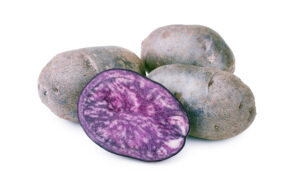
Purple potatoes and cancer prevention
The same phytochemicals in red onions are also found in purple potatoes: anthocyanins! Even when baked, purple potatoes maintain their levels of anthocyanins. Animal studies suggest that purple potatoes may lower the number of colon cancer cells and tumors in mice. [6]
#6 BLUEBERRIES
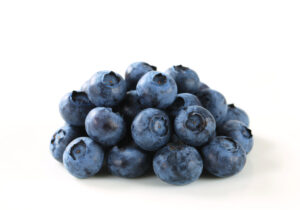
Blueberries and cancer prevention
In our recent article on 10 Foods That Prevent Cancer, we discussed how one serving of blueberries a week helped reduce the risk of a breast cancer recurrence by 25% in breast cancer survivors. Antioxidants in blueberries, specifically the antioxidant pterostilbene, have been shown to lower the risk of cancer in animals and humans.
This antioxidant is commonly found in not only blueberries but also red-skinned grapes and peanuts. Through its pterostilbene’s ability to counter the damaging effects of oxidative damage and chronic inflammation, it helps in preventing various diseases. [3]
And there are other anti-cancer compounds found in blueberries, called flavonoids, associated with cancer and heart disease prevention. Flavonoids are frequently found in plant-based foods such as vegetables, dark chocolate, tea, and other fruits besides blueberries.
A recent study found that daily intake of plant-based foods that provide 500 mg a day of flavonoids, such as 100 mg of blueberries, 1 cup of tea, 1 apple and 1 orange, could help lower the risk of cancer-related death by 15%. If the intake of flavonoids reached 1,000 mg a day, then the risk of cancer-related death was reduced by approximately 20%. [4]
FREE RESOURCES
Have more cancer prevention questions? We may have the answers in our free resources. Read or download them now:
1. Download the FREE eBook “HEALTHY FOOD SWAPS” if you’re ready to ditch processed and ultra-processed foods (which are linked to chronic inflammation) with healthier snack options. You’ll also get a list of healthy snacks according to weight and health goals (heart, brain focus, energy)
2. READ about the 10 foods that prevent cancer and our article on 6 Foods for Cancer Prevention
3. Read the article 4 Tips to Improve Breast Cancer Survival along with The Breast Cancer Diet that Increases Survival, then DOWNLOAD the FREE breast cancer survival kit that includes questions to ask your doctor, 8 tips to help lower your risk of a new or recurring breast cancer diagnosis, and 3 days of easy plant-based recipes.
4. Read the article Prevent a Colon Cancer Recurrence and The Optimal Colon Cancer Diet
ABOUT THE CANCER DETOX
Hi! I am Dee Grace Ph.D., scientist, author, and health coach based in Atlanta, Georgia. The Cancer Detox helps cancer patients, survivors, and those wanting to stay ahead of the curve prevent a new or recurring cancer with science-based health coaching.
Is the fear of cancer keeping you up at night? Is what you’re eating putting you at risk for cancer? What if you’re doing everything wrong and don’t even know it? Schedule a complimentary 15-min call with me to get clear on what modern, science-based prevention looks like.
Purchase my book “Cancer Prevention: Diet and Lifestyle Factors that Reduce Your Risk” on Amazon. Pulling from over 100 science-based studies, I provide the case for why cancer isn’t always random and often preventable. You’ll get 24 Prevention Habits that hold you accountable for implementing a cancer prevention lifestyle. along with over 40 cancer prevention guidelines for fighting breast, lung, colon, and prostate cancers.
DISCLAIMER
The information in this article is for educational purposes and is not meant to treat, diagnose, or prescribe medications or herbs. For questions on the information contained in this article, please consult with your healthcare provider. This information is intended for educational purposes only, and you should consult with your healthcare provider and a licensed dietician or certified nutritionist for additional information related to the content of this article.
REFERENCES
[1] Ugai T et al. Is early-onset cancer an emerging global epidemic? Current evidence and future implications. Nature Rev Clin Oncol. 2022; DOI: 10.1038/s41571-022-00672-8[2] Cramer JM, Teran-Garcia M, Jeffrey EH. Enhancing sulforaphane absorption and excretion in healthy men through the combined consumption of fresh broccoli sprouts and glucoraphanin-rich powder. British J Nutrition. 2012;107:1333-1338
[3] Nagarajan S, et al. New insights into dietary pterostilbene: sources, metabolism and health promotion effects. Molecules. 2022;27:6316 [4] Bondonno NP. Flavonoid intake is associated with lower mortality in the Danish Diet Cancer and Health Cohort. Nature Comm. 2019;10:3651. [5] Murayyan AI, Manohar CM, Hayward G, Neethirajan S. Antiproliferative activity of Ontario grown onions against colorectal adeocarcinomal cells. Food Res Intl. 2017;96:12-18 [6] Charepalli V, et al. Anthocyanin-containing purple-flehsed potatoes suppress colon tumorigenesis via elimination of colon cancer cells. J Nutr Biochem. 2015;16:1641. [7] Song M, et al. Marine gamma-3 polyunsaturated fatty acid intake and survival intake and survival after colon cancer diagnosis. Gut. 2016;| 10.1136/gutjnl-2016-311990 |