


10 Foods For Cancer Prevention
INTRODUCTION
It is estimated that 30 – 50% of all cancer cases are preventable.[1] And if you look at the data, only 5 – 10% of cancers are due to one’s genetics (i.e., inheriting genes that cause cancer). [1] The following 10 foods for cancer prevention will help those with a family history of cancer and want to decrease their risk of this disease, or cancer survivors who wish to prevent a cancer recurrence.
10 FOODS FOR CANCER PREVENTION
#1 LEAFY GREEN VEGETABLES
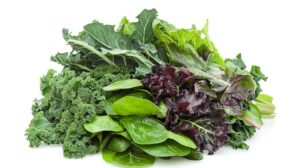
Leafy green vegetables for cancer prevention
Leafy green vegetables are cancer-fighting foods and include kale (both curly kale and lacinato, or dinosaur kale), spinach, green lettuces (e.g., romaine, butter, Boston lettuces, etc.), collard greens, and mustard greens, to name a few. These vegetables provide the following benefits:
1. Protects DNA from damage: Healthy DNA is essential to preventing cancer. Any damage to the cell’s DNA and resulting genetic mutations can lead to cancer development. DNA damage can result in a cell becoming “rogue,” which means it grows uncontrollably. This is one of the hallmarks of cancer growth and development. Leafy green vegetables provide essential nutrients and phytochemicals that protect DNA from damage.
2. Provides vitamins, minerals, and phytochemicals: Vitamins and minerals are essential for normal body functioning. Leafy green vegetables contain minerals such as calcium, potassium, and iron, and vitamins A, B, and C. They also contain phytochemicals, an important component for lowering chronic inflammation (a detailed explanation of inflammation here) in the body and providing antioxidants that help reduce DNA and cellular damage. [3]
3. Dietary fiber: When you think of cancer prevention, you should think of dietary fiber (see how much to eat to prevent breast and colon cancers). Fiber appears to reduce the risk by reducing the amount of time feces remain in the colon (hence, fewer toxins are reabsorbed back into the body) and maintains a healthy microbiome.
Eating 100 grams/day of leafy green vegetables, which is just over 1 serving (80 grams or 3 ounces) has been shown to lower the risk of all types of cancer by 9%. [2]
#2 CRUCIFEROUS VEGETABLES
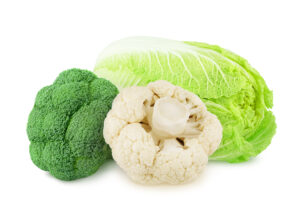
Cruciferous vegetables for cancer prevention
When it comes to foods that fight cancer, cruciferous vegetables are at the top of the list. They include some leafy green vegetables (bok choy, Brussel sprouts, green cabbage, kale, Napa cabbage, watercress) and traditional vegetables such as broccoli, cauliflower, and turnips. They provide the following benefits:
1. Antioxidants: These vegetables contain the antioxidants catalase and superoxide dismutase, which help protect the body’s cells and tissues from damage. Particularly protecting the cell’s DNA in order to reduce the amount of possible DNA mutations.
2. Polyphenols: these are compounds that work as antioxidants, anti-inflammatory agents, as well as other beneficial ways to protect the health of the cells. They include flavonoids and hydroxycinnamic acids
3. Sulfur compounds – Isothiocyanates: Cruciferous vegetables are considered cancer-fighting foods because of these compounds. One type of isothiocyanate is sulphorophane. It is known as a chemopreventive agent (i.e., cancer-fighting agent) because it has been shown to prevent cancer in laboratory experiments and human studies. It helps to promote apoptosis (spontaneous cell death), regulate the growth of cells, reduce the growth of new blood vessels to growing tumors (known as angiogenesis), and detoxify the body of environmental chemicals
Eating a high amount of cruciferous vegetables has been shown to reduce the risk of all types of cancers by 16% compared to eating a low amount of these vegetables. [3]
#3 APPLES AND PEARS
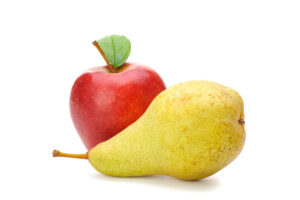
Apples and pears for cancer prevention
These two fruits are staples in most kitchen pantries during the fall, with apples being enjoyed year-round. A recent meta-analysis examined multiple scientific studies to determine the cancer-fighting potential of these two fruits. They found that eating a high amount of both lowered cancer risk by 20%. [1]
#4 BERRIES
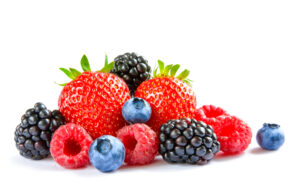
Berries for cancer prevention
Berries, including blueberries, raspberries, and blackberries, can reduce the risk of cancer by 8% according to the latest research. [2] Their preventive effect is due to the phytochemical known as flavonoids, which, as previously mentioned, is anti-inflammatory. You may have also heard that berries help improve heart health, again due to flavonoids that improve blood vessel function.
#5 CITRUS FRUITS
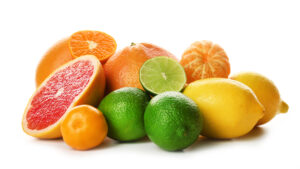
Citrus fruits for cancer prevention
This includes oranges, grapefruits, and lemons. The reduction in the risk of all types of cancer is 10%. [2] Flavonoids are the reason why, particularly a subclass known as flavanones and flavonols.
#6 TOMATOES
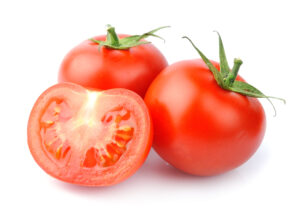
Tomatoes for cancer prevention
Tomatoes, which contain a high amount of the beneficial red pigment lycopene, have been shown to reduce the risk of prostate, cervical, kidney, and some head and neck cancers. [5] Lycopene is a “bioactive” pigment, meaning it has properties that are beneficial in cancer prevention, similar to flavonoids.
Eating tomatoes has been shown to reduce the risk of all cancers by 14%. [2]
#7 ONIONS
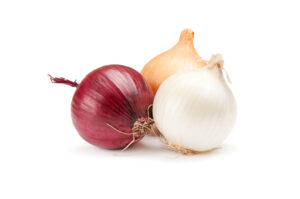
Onions for cancer prevention
Eating a healthy dose of onions on salads and other dishes can prevent cancer by 9% when eaten in high amounts. [2] Onions have also shown benefits in reducing the risk of breast cancer in Hispanic women who ate high amounts of a seasoning known as sofrito, which contains not only onions but also garlic and other cancer-fighting herbs. [6]
This cancer-fighting food helps prevent cancer due to high concentrations of a flavonoid known as quercetin. They also contain another flavonoid known as anthocyanin, which boosts the cancer-fighting properties of quercetin. [7]
#8 BANANAS
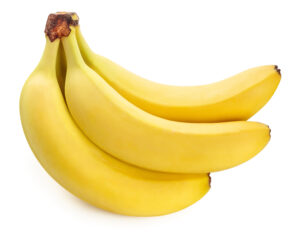
Bananas for cancer prevention
Recent science shows that eating bananas before they get too ripe can help prevent cancer. Slightly green bananas contain a high amount of resistant starch, which gut bacteria use to make beneficial fermented by-products. These by-products protect the body from cancer development.
Researchers found that taking a resistant starch supplement, at the same concentration found in bananas, reduced the risk of cancer by 60% in a group of people genetically predisposed to cancer (i.e., those with Lynch syndrome). [8]
#9 YELLOW VEGETABLES
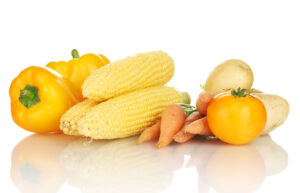
Yellow vegetables for cancer prevention
Our top 10 list of cancer-fighting foods included green vegetables in the #1 and #2 spots; however, do other vegetables help lower cancer risk? Yes. When green and yellow vegetables are eaten (at an amount of 100 grams per day), the risk of cancer is lowered by 11%. [2]
#10 SPROUTS
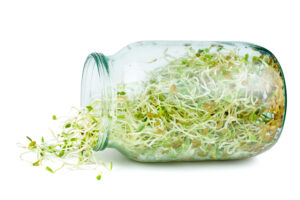
Sprouts for cancer prevention
Often used as a garnish on salads and gourmet dishes, this small but mighty food is known as a cancer-fighting food. High in protein, antioxidants, vitamins, and minerals, they have been found to have 10 – 100 times more of the cancer-fighting chemicals than mature unsprouted vegetables (specifically for broccoli sprouts). Sprouts increase a specific cellular protein, Nrf2, that is responsible for detoxifying chemicals in the body.
FREE RESOURCES
Have more cancer prevention questions? We may have the answers in our free resources. Read or download them now:
1. Download the FREE eBook “HEALTHY FOOD SWAPS” if you’re ready to ditch processed and ultra-processed foods (which are linked to chronic inflammation) with healthier snack options. You’ll also get a list of healthy snacks according to weight and health goals (heart, brain focus, energy)
2. READ about the 10 foods that prevent cancer and our article on 6 Foods for Cancer Prevention
3. Read the article 4 Tips to Improve Breast Cancer Survival along with The Breast Cancer Diet that Increases Survival, then DOWNLOAD the FREE breast cancer survival kit that includes questions to ask your doctor, 8 tips to help lower your risk of a new or recurring breast cancer diagnosis, and 3 days of easy plant-based recipes.
4. Read the article Prevent a Colon Cancer Recurrence and The Optimal Colon Cancer Diet and FREE download of the Colon Cancer Bundle with 4 Tips on Preventing a Colon Cancer Recurrence (including cancer fighting foods) + 9 Questions to Ask Your Doctor

Colon cancer prevention guide
ABOUT THE CANCER DETOX

Hi! I am Dee Grace Ph.D., scientist, author, and health coach based in Atlanta, Georgia. The Cancer Detox helps cancer patients, survivors, and those wanting to stay ahead of the curve prevent a new or recurring cancer with science-based health coaching.
Is the fear of cancer keeping you up at night? Is what you’re eating putting you at risk for cancer? What if you’re doing everything wrong and don’t even know it? Schedule a complimentary 15-min call with me to get clear on what modern, science-based prevention looks like.
Purchase my book “Cancer Prevention: Diet and Lifestyle Factors that Reduce Your Risk” on Amazon. Pulling from over 100 science-based studies, I provide the case for why cancer isn’t always random and often preventable. You’ll get 24 Prevention Habits that hold you accountable for implementing a cancer prevention lifestyle. along with over 40 cancer prevention guidelines for fighting breast, lung, colon, and prostate cancers.
DISCLAIMER
The information in this article is for educational purposes and is not meant to treat, diagnose, or prescribe medications or herbs. For questions on the information contained in this article, please consult with your healthcare provider. This information is intended for educational purposes only, and you should consult with your healthcare provider and a licensed dietician or certified nutritionist for additional information related to the content of this article.
REFERENCES
[1] Wang X, et al. Fruit and vegetable consumption and mortality from all causes, cardiovascular disease, and cancer: systematic review and dose response meta analysis of prospective cohort studies. BMJ. 2014;29:349. [2] Aune D, et al. Fruit and vegetable intake and the risk of cardiovascular disease, total cancer and all cause mortality – a systemic review and dose response meta analysis of prospective studies. Int J Epidemion. 2017 Jun; 46(3): 1029–1056. [3] Sarkar T, et al. Underutilized green leafy vegetables: frontier in fortified food development and nutrition. Crit Rev Food Sci Nutr. 2023;63:11679. [4] Su X, et al. Anticancer activity of sulforophane: the epigenetic mechanisms and the Nrf2 signaling pathway. Oxidative Med Cell Longevity. 2018. [5] Ho WJ, et al. Antioxidant micronutrients and the risk of renal cell carcinoma in the Women’s Health Initiative cohort. Cancer. 2015; 121 (4): 580. [6] Desai G, et al. Onion and Garlic Intake and Breast Cancer, a Case-Control Study in Puerto Rico. Nutr Cancer. 2019; 1 DOI: 10.1080/01635581.2019.1651349 [7] Murayyan AI, et al. Antiproliferative activity of Ontario grown onions against colorectal adenocarcinoma cells. Food Res Inter. 2017; 96: 12 DOI: 10.1016/j.foodres.2017.03.017 [8] Mathers JC, et al. Cancer Prevention with Resistant Starch in Lynch Syndrome Patients in the CAPP2-Randomized Placebo Controlled Trial: Planned 10-Year Follow-up. Cancer Prev Res. 2022; OF1 DOI: 10.1158/1940-6207.CAPR-22-0044